A1 Hamilton Locksmiths Service Team
Local locksmith team
Sep 14, 2026 10 min read
If your Durand or Kirkendall home has a front door that's been standing since the 1920s, chances are it's still swinging on the same chunky brass mortise lock it was built with — and that's not necessarily a bad thing. These locks were engineered to last, and many still work beautifully. But when one starts to fail, Hamilton homeowners face a real decision: invest in repairing the mortise lock, or replace it with a modern cylindrical set? The answer isn't the same for every door, and getting it wrong can cost you more than a service call.
This guide walks you through exactly how mortise locks and cylindrical locks differ, what makes each one right or wrong for older Hamilton homes, and how to decide which path makes sense before you call a locksmith. Whether your escutcheon plate is loose, your tailpiece is stripped, or your deadbolt simply won't throw anymore, understanding the hardware helps you have a smarter conversation — and get the right fix the first time.
## What Makes a Mortise Lock Different From a Cylindrical Lock
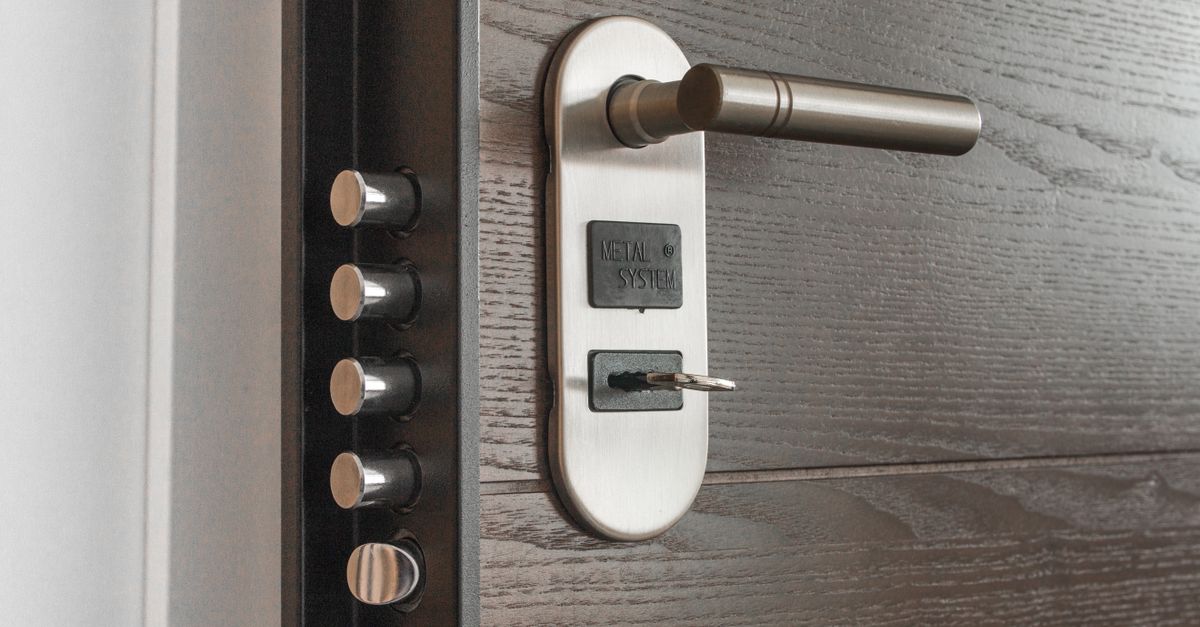
A mortise lock is a self-contained unit — a full metal case that slides into a deep rectangular pocket (the mortise) cut directly into the door edge. Inside that single case you get a latch bolt, a deadbolt, and often a privacy knob function, all operated through a single face plate. This all-in-one design is why so many doors along Aberdeen Avenue or Herkimer Street have survived a century of Hamilton winters without the hardware giving out. The lock body is thick, the throw is deep, and the mechanism is heavy-duty by design.
A cylindrical lock — sometimes called a tubular lock — works differently. It threads through two round holes bored in the door face and edge, with the latch mechanism fitting into a shallow cylindrical bore rather than a deep mortise pocket. The deadbolt (if present) is a separate unit entirely. Cylindrical locks are the standard on most homes built after the 1960s and are widely available, easy to rekey, and straightforward to replace. When people talk about a mortise vs cylindrical lock decision, this is the core mechanical difference that drives everything else: one is built into the door, the other is surface-mounted through it.
## Why Hamilton's Century Homes Were Built Around the Mortise Lock
Homes in Hamilton's older neighbourhoods — Durand, Kirkendall, Stipley, and Crown Point among them — were typically constructed with thick, solid-wood doors ranging from 1¾ to 2¼ inches in depth, sometimes more. Those doors were designed specifically to house mortise hardware. The mortise pocket was cut at the mill before the door was even hung, and the surrounding wood is dense enough to support the full metal case without weakening the door. This matters because a mortise lock distributes the load of a forced entry attempt across a much larger area of the door edge than a cylindrical lock ever could.
Converting a door like this to a cylindrical lock isn't just a swap — it means drilling two large holes through a historic door that may be irreplaceable, often leaving visible patch marks around the old mortise pocket. In many cases, the structural integrity of a century-old door is better preserved by repairing the existing mortise hardware than by cutting new holes for a modern tubular lock set. That's a meaningful local consideration that a general online guide won't tell you, but it's something our team sees regularly on service calls throughout the Mountain and lower city neighbourhoods.
## Mortise Lock Repair vs. Replacement: Reading the Signs on Your Door Knob Lock
Not every failing mortise lock needs a full replacement. Many of the issues Hamilton homeowners call about — a stiff or sticky latch, a key that won't turn smoothly, a door knob lock that spins without catching — come down to worn cam followers, a dried-out or corroded case, or a stripped tailpiece. These are mechanical problems with real mechanical solutions. A trained locksmith can disassemble the case, clean and re-lubricate the internals, replace the worn components, and have the lock operating smoothly again, often in under an hour and without touching the door itself.
The cases where full mortise lock replacement makes more sense: when the case body is cracked or the bolt housing is damaged beyond re-machining, when the lock has been forced and the mortise pocket itself is compromised, or when a homeowner is upgrading to a high-security cylinder and wants the whole unit brought to modern tolerances at the same time. If you are genuinely unsure which situation you're in, that's the right moment to call us at (289) 806-7912 before buying any parts — we can assess the lock on-site and give you a clear answer before any work begins. We confirm an exact up-front price before starting, so there are no surprises when the job is done.
## When a Cylindrical Lock Actually Makes Sense — and What to Expect From the Switch
There are legitimate scenarios where switching from a mortise to a cylindrical lock is the right call, even on an older Hamilton home. If the door has already been modified by a previous owner, if the mortise pocket is badly damaged, or if the door itself needs replacement anyway, a cylindrical lock installation on a new door slab can be a clean, practical solution. Modern cylindrical deadbolts — Schlage B-series or Kwikset SmartKey units, for example — offer solid security, are easy to rekey, and integrate well with smart lock technology if that matters to you.
The honest trade-off: a cylindrical lock on a thinner or already-modified door is often more than adequate for everyday security, but it won't match the sheer mechanical robustness of a well-maintained mortise lock in its original door. For commercial properties on King Street West or multi-unit buildings in the north end, the calculus shifts again — commercial locksmith work on those doors often involves mortise hardware specifically because of the higher traffic and forced-entry risk. The right answer depends on the specific door, the threat environment, and the budget conversation you have with a qualified locksmith on the day.
## Emergency Locksmith Situations: Mortise Lock Lockouts in Older Homes
A mortise lock lockout in a century home is a different animal from being locked out of a newer house. The lock mechanism is older, tolerance for wear is higher, and in some cases the key profile is a proprietary or long-discontinued cut that can't be duplicated at a hardware store. If you find yourself locked out of a Durand heritage home at 2 a.m., the first practical steps are to check whether any other entry point — a back door, a side window you can safely reach — is accessible, and whether a spare key is held by a neighbour or family member. If neither option works, that's exactly the situation our emergency locksmith team handles every day, around the clock.
Because mortise locks vary so widely in age, manufacturer, and condition, our technicians carry a broad range of tools and replacement components suited specifically to older hardware. We do not use forced-entry techniques that would damage your door or frame. Ownership is verified before any work proceeds — we ask for ID and documentation as standard practice, because that verification protects you as the homeowner as much as it protects us. Whether it's a stripped key stuck in a Victorian-era escutcheon or a modern bump-resistant cylinder that's seized in cold weather, call (289) 806-7912 any time — we answer 24/7 and can typically reach most Hamilton neighbourhoods quickly.
## Making the Final Call: A Practical Checklist for Hamilton Homeowners
Before you decide between mortise lock repair and a cylindrical upgrade, work through these questions honestly. First: is the door itself original and in good condition? If yes, preserve it — repair the mortise hardware and avoid unnecessary drilling. Second: can you still source replacement parts for your existing lock case? Brands like Corbin, Sargent, and Yale made mortise hardware for decades and parts are often still available through locksmith suppliers, though sourcing takes knowledge and contacts. Third: is security your primary driver, or is it convenience and smart-home integration? Mortise locks can be fitted with high-security cylinders for better key control; cylindrical smart locks offer app-based access but require a different door prep.
Fourth: what does the door jamb look like? A century of paint, humidity cycles, and seasonal wood movement can shift a Hamilton doorframe enough that the strike plate alignment becomes the real problem, not the lock at all. Fifth: what is your long-term plan for the property? If you are restoring a heritage home, maintaining original hardware has aesthetic and potentially resale value. If you are converting to a rental, ease of rekeying between tenants might tip the decision toward a modern cylindrical set. None of these questions have a universal right answer — but working through them with a locksmith who actually looks at your door, rather than guessing from a description, will always give you the most useful guidance.
Frequently asked questions
Can a locksmith rekey a mortise lock the same way they would a cylindrical lock?+
Yes, but the process is different. Cylindrical locks are rekeyed by removing the plug from the cylinder body — a relatively quick procedure. Mortise locks require removing the cylinder from the face of the lock case first, and some older Hamilton homes have cylinders with proprietary or obsolete keyways that need to be replaced rather than simply rekeyed. A trained locksmith will assess which approach applies to your specific hardware before quoting the work. The factors that affect the final price include the lock brand and age, the cylinder type, and whether any parts need to be ordered or brought on a return visit.
Is a mortise lock actually more secure than a cylindrical lock?+
In most real-world scenarios on a century home, a properly maintained mortise lock in its original door is more resistant to kick-in and forced-entry attempts than a standard cylindrical deadbolt, because the bolt throw is deeper and the load is spread across more of the door edge. That said, security also depends heavily on the strike plate, the door frame condition, and the cylinder quality. A high-security cylinder installed in a mortise case — with anti-pick, anti-drill pins — offers excellent protection. A cylindrical lock with a reinforced strike plate and longer screws is a meaningful upgrade over a basic installation. The lock body type is only one piece of the security picture.
My old mortise lock has a skeleton key — can I still get a copy made?+
Skeleton or bit keys for old mortise locks are harder to duplicate than modern cut keys, and most hardware stores won't carry the blanks. A locksmith with experience in older hardware can often source the right blank and cut a copy, but in many cases the more practical solution is to replace the cylinder inside the mortise case with a modern pin-tumbler cylinder. This keeps the original lock body, maintains the look of the escutcheon plate, and gives you a standard key that can be duplicated easily and rekeyed whenever you need. Call (289) 806-7912 and describe your lock — we can usually tell you on the call which route makes more sense before we even come out.
How do I know if my old door can handle a cylindrical lock conversion without being damaged?+
The key factors are door thickness, the condition of the wood around the existing mortise pocket, and whether the door is a genuine solid-wood period piece or a later reproduction. Doors thinner than 1¾ inches are generally fine for cylindrical hardware. Thicker heritage doors — common in Durand and Kirkendall — often have dense wood that bores cleanly, but the visual and structural impact of leaving the old mortise cavity needs to be considered. A locksmith can assess this on-site, check the door thickness and wood condition, and tell you whether a conversion is clean and advisable or whether you are better off repairing the existing mortise lock. We confirm an exact up-front price before any drilling or work begins, so you can make the decision with full information.